
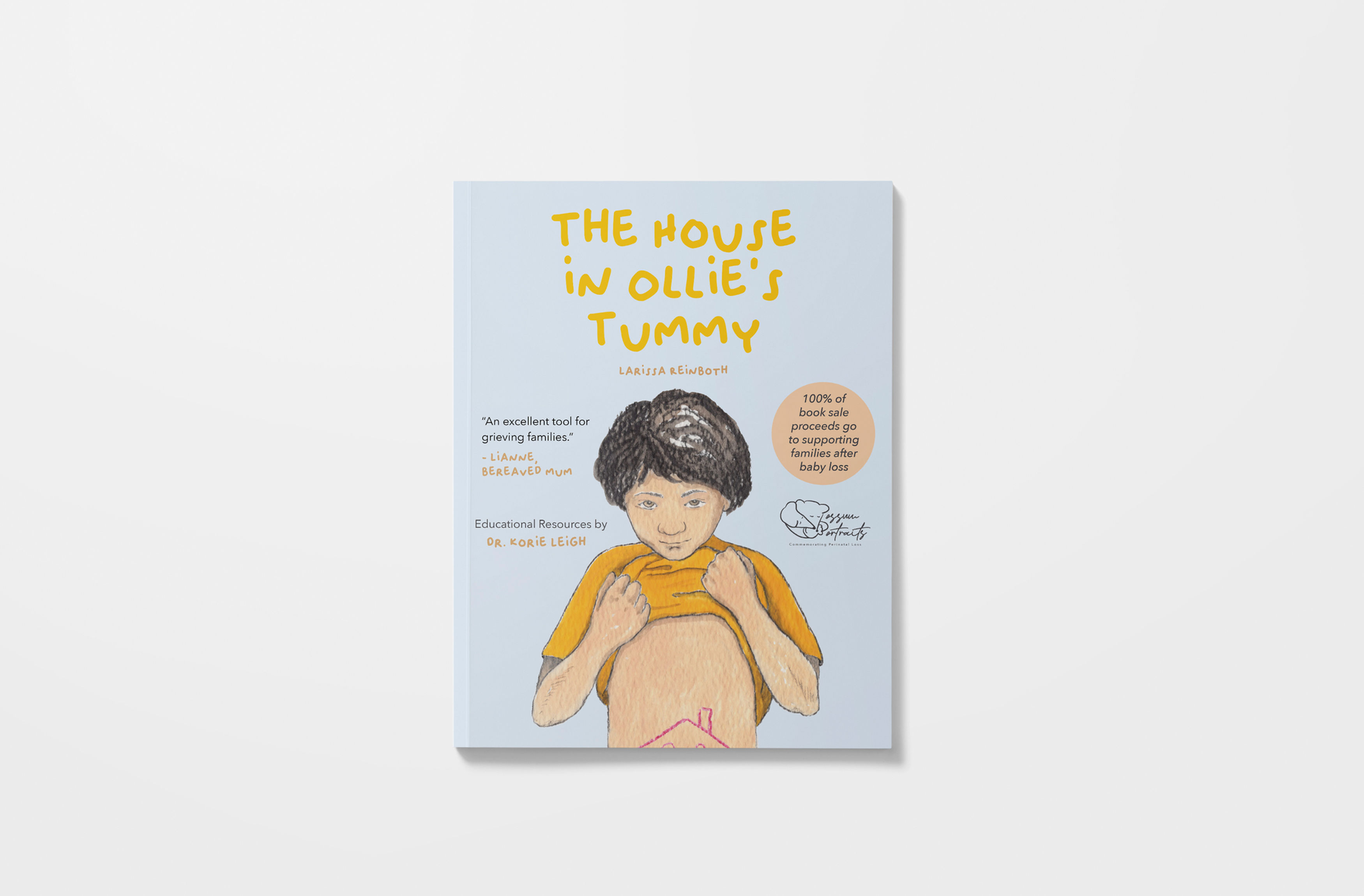

The printing and distribution of the second edition of "The House in Ollie's Tummy" has been funded by the Australian Federal Department of Health, Disability and Ageing. The book and postage will be free for any person living in Australia until the print run has been exhausted.
This story follows Ollie, Mum and Dad on their journey to navigate a new feeling; one which unexpectedly moves into their tummies after Ollie's baby sister Millie dies. And this feeling sure causes a bit of a ruckus! How can they learn to live with this new emotion that makes everything feel so topsy turvy?
Palliative care nurse Mary Jo Aumann has published a number of papers on childhood bereavement. She argues strongly in favour of supporting children through this difficult time, in order to ensure healthy developmental outcomes following a traumatic event.
Yet after experiencing perinatal bereavement, parents themselves are facing significant emotional upheaval. They may not be in the best shape to meet the often complex emotional and psychological needs of their existing children while struggling with their own trauma. "The House in Ollie's Tummy" supports both parents and children through this difficult time by providing families with an age-appropriate grief support resource that helps parents to explain and children to understand what happened.
Moreover, a comprehensive resource section will help parents gain insight and understanding into the cognitive abilities of children between toddler to preschool age in terms of their understanding of death. Helpful tips suggest appropriate wording, phrases and supportive caregiver behaviours.
Parents, teachers, counsellors and caregivers can use this book:
- with children aged 3 - 7 years old
- to help explain the abstract concepts of death, loss and grief to children gently but clearly
- for tips on how best to phrase answers to difficult questions to promote your child's understanding of what happened
- for ideas about creative and introspective grief activities to do with children of different ages.
These activities provide a further outlet for working through and processing new and confusing emotions together.